At the UChicago Space Program, we are dedicated to advancing space science while simultaneously enriching our community through outreach initiatives, ranging from workshops to seminars to hands-on activities. Our commitment to education and engagement enhances public understanding of the universe and promotes interest in STEM fields among students of all ages.
Joalda Morancy
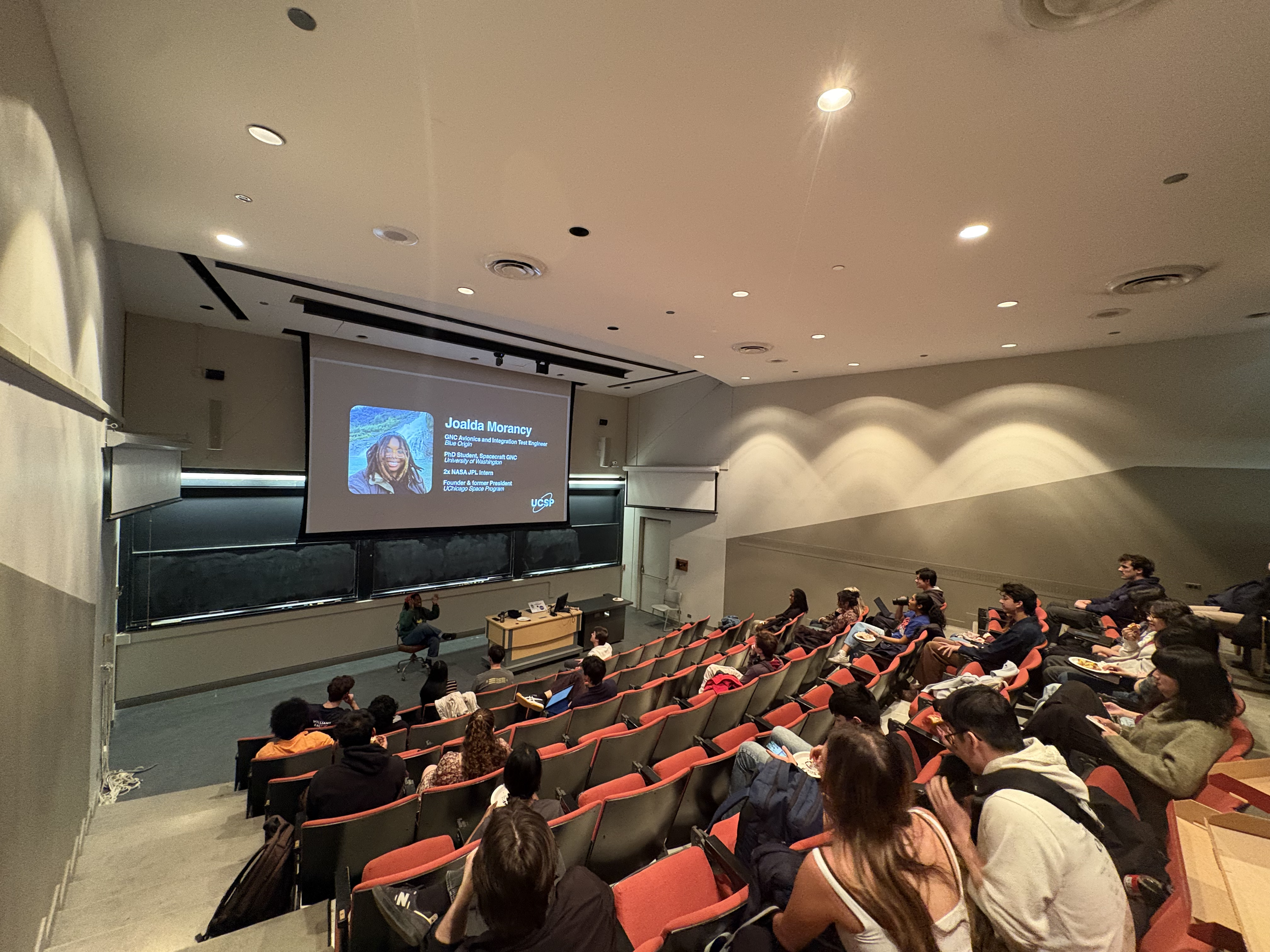
On March 25th UCSP was thrilled to host UCSP Founder and Former President, Joalda Morancy. Joalda, a 2x former JPL intern, is currently working as a GNC Avionics and Integration Test Engineer at Blue Origin while completing their PhD in Spacecraft GNC at Blue Origin. Styled as a Q&A, this talk allowed students to learn about potential aerospace careers, the commercial space industry, and the graduate school path.
Dr. Michael Lembeck
Dr. Michael Lembeck delivered an engaging talk on his career to 50 attendees, sharing insights from his aerospace experience. He emphasized resilience, continuous learning, and collaboration for success, outlining key milestones, challenges, and triumphs. Dr. Lembeck encouraged attendees to view failure as a catalyst for innovation and to stay curious in their careers. The Q&A session sparked thoughtful discussions, and he offered tailored guidance on networking, skill development, and mentorship. His pragmatic approach inspired the audience to pursue their aspirations in the space domain with renewed dedication, highlighting the value of experience and knowledge sharing in shaping future aerospace professionals.

Professor Bradford Benson
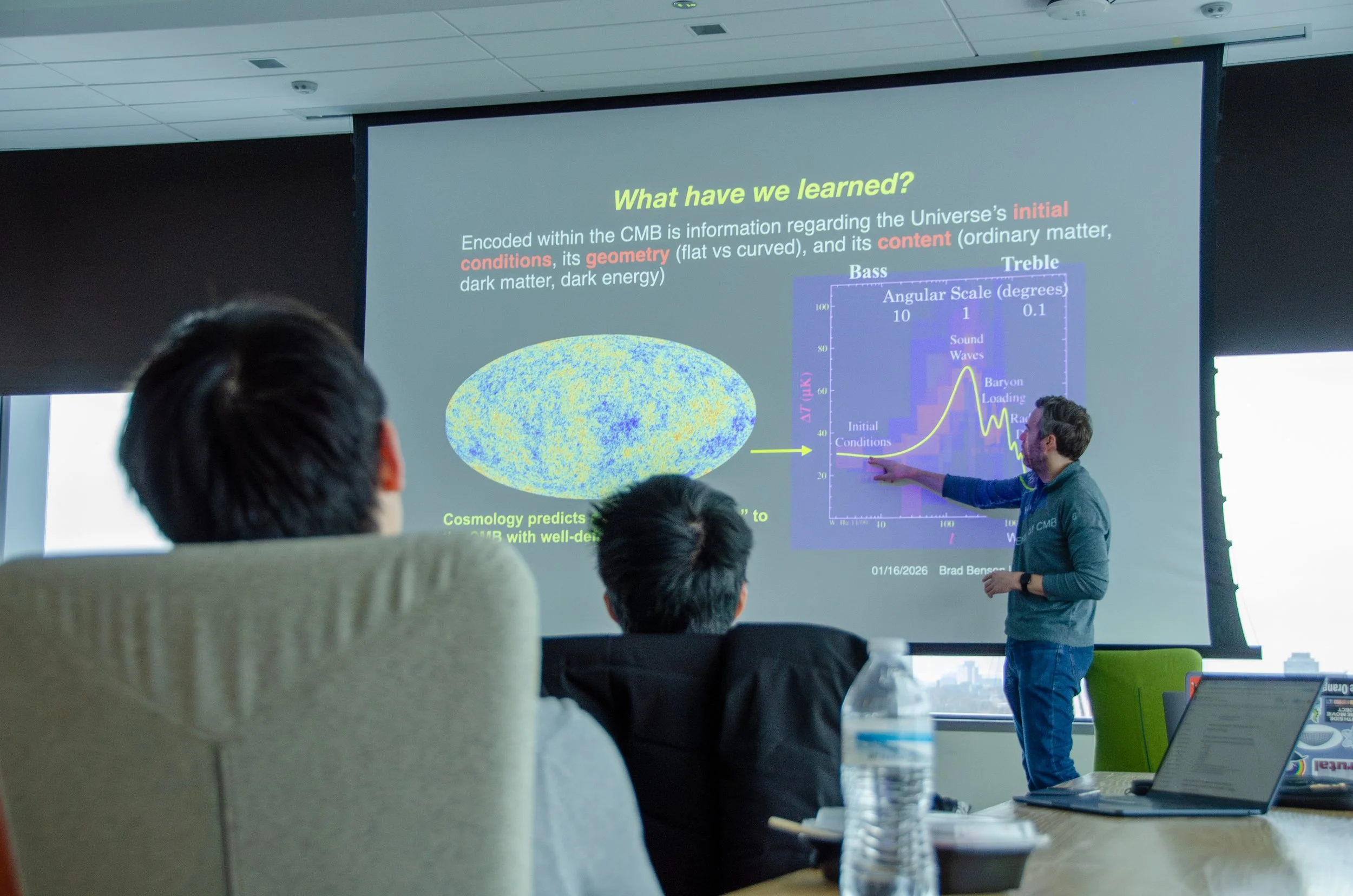
UCSP’s Instrumentation Division presented a lecture on the South Pole Telescope with Professor Bradford Benson. See the abstract of the lecture below.
Measurements of the cosmic microwave background are an important cornerstone to our understanding of the Universe, with measurements in the next few years poised to make substantial improvements to current cosmological constraints. The South Pole Telescope (SPT) is at the forefront of these advances with measurements from the currently installed SPT-3G camera, which has been used to survey 10,000 square degrees of sky with an unprecedented combination of depth and angular resolution at 95, 150, and 220 GHz. Early results from SPT-3G have demonstrated how ground-based CMB measurements have begun to drive our current cosmological constraints, and sharpen our understanding of cosmological tensions, with results in the next year poised to reduce the allowed LCDM likelihood space by a factor of ~100. In addition to describing some of these recent results, I will describe the design of these experiments and the instruments behind them, in particular how some of the latest technological advances in quantum sensing and detectors have enabled these experiments, and helped to drive our understanding of the physics of the universe.