
Instrumentation Lab
GENERAL OVERVIEW
Founded in Autumn 2025, the UCSP Instrumentation Division trains students to design, construct, and operate science instruments; enabling students to pursue scientific goals with rigorous engineering processes.
Through experience in CAD, electronics, software, and calibration, members learn to design and build hardware from the ground up. The instrumentation division emphasizes full-system understanding to better prepare the next generation of scientists and engineers in the physical sciences.
Our Projects:
Particle Acquisition in Stratospheric Conditions for Analysis in Laboratory (PASCAL)
PASCAL is a high altitude balloon payload that was proposed by UCSP’s Instrumentation Division and accepted for flight on NASA’s High Altitude Student Platform (HASP) out of the Columbia Scientific Balloon Facility. PASCAL is a sample return mission that will collect particles in the mid-stratosphere (37km, 122k feet) and bring them back to the ground where they will be analyzed with state-of-the-art instruments in Chicago. It is currently being developed with funding from Climate Systems Engineering initiative.
Particles in the mid-stratosphere remain poorly understood due to the challenges of operating and sampling at high altitudes (>30 km). Characterizing particles in the upper atmosphere is critical, especially with rapid increase in human contaminant levels and the growing possibility of direct material injection into the stratosphere, PASCAL’s samples will help fill that gap. The mid-stratosphere contains a unique population of particles that is usually inaccessible, including dust of extraterrestrial origins, metallics from spacecraft debris, and rocket exhaust.
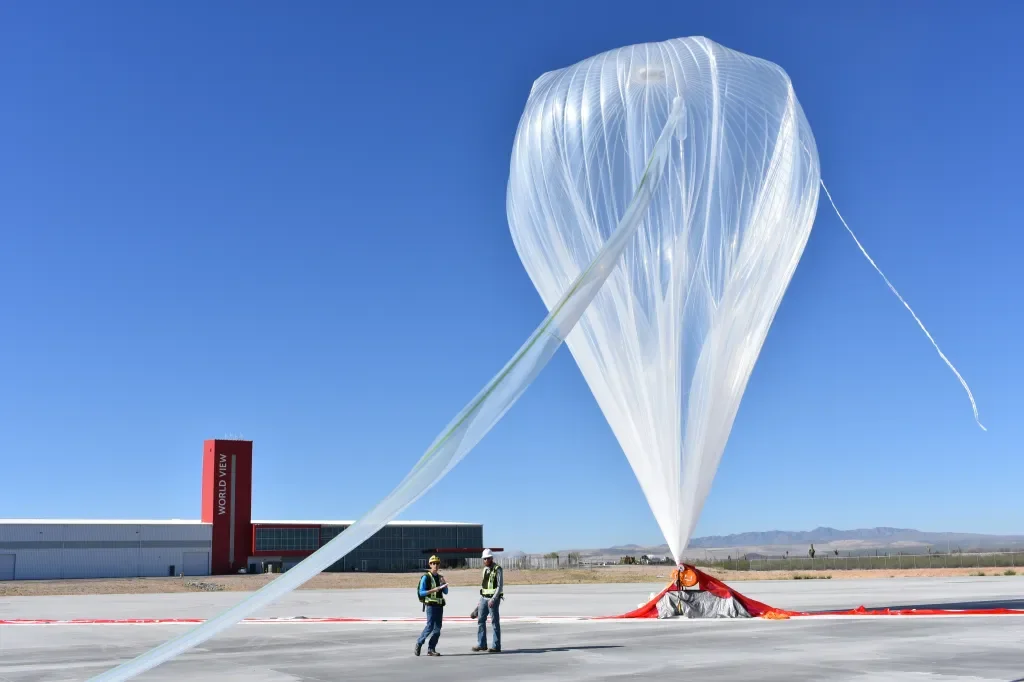
High-Altitude Student Platform Opportunity - NASA
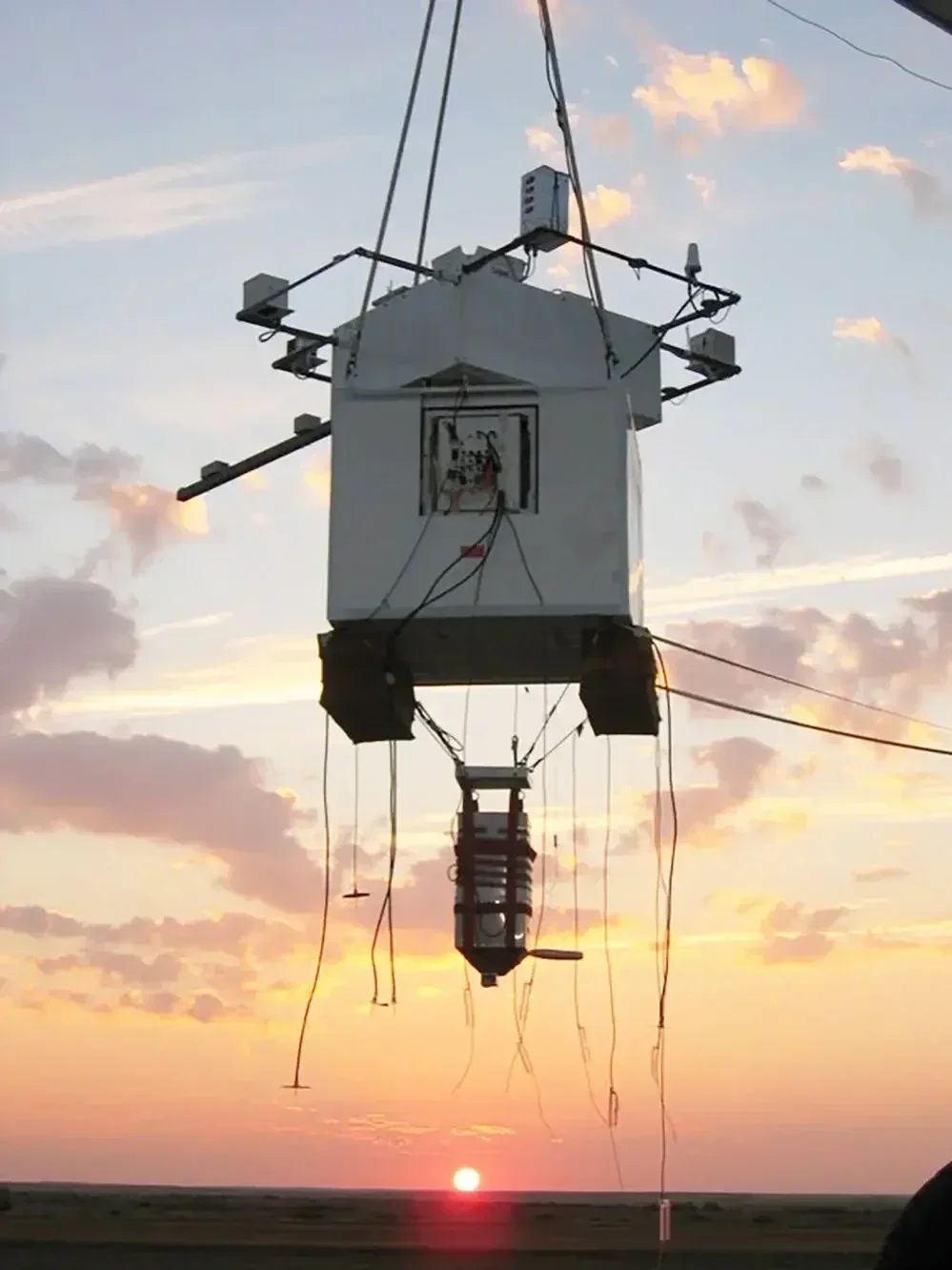
HASP 2014 Flight - NASA
Seismometer
The goal of the seismometer project is to fabricate a seismometer that measures the vertical component of seismic waves while deployed on the UChicago campus. Specifically, the seismometer team is designing a seismic node for a long-period frequency band (0.01-1 Hz). The design aims to limit the equipment required to deploy the node — standard deployment requires an external power source and a datalogger in addition to the seismometer — and to achieve the sensitivity needed to detect seismic waves (i.e., ground motion) generated by events with magnitudes as low as 5.0. These 5.0 events within the instrument's chosen frequency band should be detectable by the seismometer anywhere on Earth. To detect these seismic waves, the seismometer uses a suspended magnet within a copper coil. Any motion through it will cause the magnet to displace, whose varying magnetic field, due to its changing position, will generate a current in the copper coil proportional to the motion's energy.
Meteor Camera
The Meteor Camera team is building an automated all-sky camera system to detect and track meteors entering Earth's atmosphere, with the goal of contributing orbital data to the Global Meteor Network. The team aims to detect multiple meteors per cloudless night and display photos of the meteors in the Kersten Physics Teaching Center.
The meteor camera system is designed to capture and analyze meteor activity in the night sky, primarily by using a custom camera setup that includes a camera chip encased in a weatherproof CCTV housing, strategically positioned on the roof of KPTC. The camera incorporates a wide-angle lens that collects light from a substantial area of the sky and focuses it onto the camera's sensor.
Data collection is managed by an open-source meteor-detection software that analyzes the image stream and stores meteor detections. After processing, data will be offloaded periodically and uploaded to the Global Meteor Network. The team is expected to implement the camera in the Spring Quarter of 2026.
Radar
Building and implementing a 2.4 GHz FMCW (Frequency Modulated Continuous Wave) radar that is capable of determining object distance and velocity. Our goals are twofold. Firstly, we aim to demonstrate the advantages of radar/lidar technology in autonomous vehicles by capturing data on surrounding pedestrian and automotive traffic. Secondly, we hope to demonstrate the advantages of non-optical imaging by forming SAR (Synthetic Aperture Radar) images on and around campus.
KPTC Repair
The KPTC Repair Team restores and maintains defunct scientific hardware within the Physical Science Division. Our current projects include the restoration of a radio dish, a small radio telescope, and a heliostat, with further work planned for the KPTC observatory.
These instruments were once used for scientific observation, but have since fallen into disrepair, with some systems offline for as little as 3 years and others for as long as 14. The Repair Team’s work begins with diagnosis and fault analysis, and continues through repair, refurbishment, and preventative maintenance to reduce future degradation.
Once restored, the KPTC Repair Team works with the Physical Science Division and its students to return these instruments to active use as educational and research equipment.
ARP Payload
The ARP Payload project is an effort where a team is building a small electronic device to fly inside a rocket. It measures acceleration forces during flight using a high-G accelerometer, tracks altitude using a barometric pressure sensor, and wirelessly transmits that data to a ground receiver in real time. The device is designed to fit within the rocket’s compact payload bay and the data collected will help the rocketry team analyze flight performance and meet certification requirements. Looking ahead, the team is also working toward coding in a detonation trigger, which would allow the device to eventually function as a full flight computer — capable of autonomously controlling key events like parachute deployment during future rocket launches.
Lightning Detection
The lightning detection project aims to support the Blitzortung cause. That is, create a worldwide network of Very Low Frequency detectors (3-30kHz) to use in a triangulation (VLF) algorithm that can pinpoint the location of lightning with a low margin of error. Such detection is possible because lightning emits electromagnetic pulses in the VLF range, called "sferics," short for "atmospherics."
The project has three main components: a magnetic field antenna, a frequency amplifier, and a microcontroller. Once each component is complete, we assemble everything, upload the software to the microcontroller, and send the timestamps of each VLF detection to Blitzortung's server. With the project complete, we will contribute to a global lightning detection network, with every component built from scratch.
Magnetometer
The Magnetometer Project is developing a four-node, three-axis magnetometer array for deployment across the University of Chicago campus. The system is designed to map spatial and temporal variations in Earth’s magnetic field, capturing effects from geologic structures, human activity, and environmental conditions. Our team is currently building and calibrating the instrumentation, while establishing both local and cloud-based data storage for efficient collection and analysis. We are also designing custom 3D-printed enclosures to support reliable, week-long deployments in outdoor conditions. In the coming weeks, we aim to complete final assembly and testing, with initial deployment planned for the latter half of the Spring quarter.